

What low libido means, and when it’s a problem
To get straight to the point, low libido means a persistently reduced sexual desire - including fewer sexual thoughts, less interest in initiating sex, and less responsiveness to your partner. It’s a symptom rather than a diagnosis, and it only becomes a clinical problem when it lasts for at least six months and causes you genuine distress.
Libido, arousal, and sexual function aren’t the same thing
These issues are often conflated into a single ‘thing’. But, that’s not the case. Erectile dysfunction is specifically the recurrent inability to attain or maintain an erection sufficient for satisfaction - a separate problem from a lack of interest in being sexual at all1.
In fact, it’s possible to have a strong desire for sexual satisfaction, but experience unreliable erections. In men presenting with new-onset erectile dysfunction, low desire frequently goes unrecognised2 - so treating the wrong one can waste months.
With these points in mind, it’s widely considered that diagnosis of low libido requires the symptoms to have been present for at least six months and to be causing you distress3. A ‘flat’ couple of weeks doesn’t qualify. If your desire is lower than it once was, but genuinely doesn’t bother you, then that isn’t dysfunction.
In the next section we’ll explore one of the most common causes behind low libido - medications and their adverse effects.
Medications and drugs that may lower libido
Medications and drugs - and by extension their adverse impacts - are one of the most common causes of low libido. Conversely - and thankfully (!) - they are also one of the most ‘fixable’ low libido causes.
In the table below we’ve outlined the drug classes that are most commonly associated with low libido.
|
Drug Class |
Examples |
Effect on Desire |
Reversible? |
|
SSRIs/SNRIs |
Paroxetine, sertraline, citalopram, venlafaxine |
Marked reduction |
Usually on stopping; rarely persists |
|
5-alpha reductase inhibitors |
Finasteride, dutasteride |
Reduced libido, ED |
Usually; persistence is reported |
|
Opioids |
Morphine, oxycodone, tramadol |
Marked reduction via low testosterone |
Often, on dose reduction |
|
Antipsychotics |
Risperidone, amisulpride, haloperidol |
Reduction via raised prolactin |
Yes, often by switching drug |
|
Antihypertensives |
Older beta-blockers, thiazides |
Mild to moderate reduction |
Yes, by switching class |
|
Hormonal contraception |
Combined oral pill |
Mixed; minority affected |
Yes |
We’ll examine each of these in more detail below.
SSRIs and SNRIs
SSRIs and SNRIs carry substantially higher rates of sexual dysfunction than placebo, whilst bupropion, mirtazapine, agomelatine, and nefazodone are associated with far lower rates4. A network meta-analysis found bupropion had significantly lower risk than several comparators, with escitalopram and paroxetine amongst the highest. A switch away from these drugs is often possible5.
Finasteride and dutasteride
The MHRA introduced UK patient alert cards in 2024 and has since updated product information for both drugs, warning that sexual dysfunction may persist after treatment stops6.
Opioids, blood pressure drugs and antipsychotics
Opioids suppress GnRH; androgen deficiency affects 20-80% of men on them7. Prolactin-raising antipsychotics (haloperidol, risperidone, amisulpride) affect desire more than prolactin-sparing ones like aripiprazole and quetiapine8. Beta-blockers other than nebivolol impair sexual function via adrenergic blockade9.
Hormonal contraception
The pill raises SHBG and lowers free testosterone10, but across 36 studies and 8,422 users, 85% reported increased or unchanged libido - and 15% a decrease11. Thus, the evidence for hormonal contraception and a causative reduction in libido is debatable.
Alcohol and anabolic steroids
Chronic alcohol intake significantly lowers total testosterone12. After stopping steroids, libido typically returns to baseline over several months - though that baseline feels less potent than whilst on cycle13.
Note: whilst what you’ve just read may be alarming, NEVER stop a prescription on your own. Book a review with your doctor instead. In many cases, dose changes, switches and timing adjustments are usually available. Stopping medications abruptly can have health risks.
Lifestyle causes of low libido
Whilst medications can certainly have an adverse impact upon your libido, it’s equally important not to overlook lifestyle factors.
As we’ve outlined below, there are myriad lifestyle factors that can result in you experiencing lower libido.
Sleep debt
This is an all-too-often overlooked cause of low libido. But, don’t just take our word for it. Studies suggest that a single week of five-hour nights (of sleep), can cut daytime testosterone levels by as much as 10-15% in young healthy men14. That’s a level of decline that’s comparable to a decade of aging!
Sleep apnoea
Obstructive sleep apnoea is inversely associated with testosterone independently of age and BMI, with significant reductions in severe cases15. It’s also linked to reduced libido and erectile dysfunction16.
As an aside, if you experience snoring and regularly wake feeling unrefreshed - it’s worth speaking to your GP.
Body fat and metabolic health
This is perhaps an obvious factor, but excess weight and obesity can have a considerable impact upon one’s libido.
But, why is this?
Put simply, adipose tissue expresses aromatase, which converts testosterone to oestradiol; the resulting rise in oestradiol suppresses the HPG axis, creating a self-reinforcing loop in which low testosterone drives further fat gain17.
The end point of that loop is reduced sexual desire. Interestingly, this mechanism has also been shown in studies to work in reverse. A meta-analysis found that weight-loss interventions significantly increased both sexual desire and total testosterone, with the size of the desire improvement tracking the size of the BMI change18.
Under-fuelling, aggressive dieting and overtraining
Conversely, being ‘too active’ and fit can potentially adversely impact your libido.
For example, if you eat too little for the amount you train, your body will start shutting down the functions it can manage without. Your sex drive is often one of the first functions to be quietened. In sports medicine, this phenomenon is known as ‘low energy availability’19.
Hard dieting and long stretches of training through fatigue can also contribute to lower reductions in libido.
Deficiencies
Naturally, vitamin and mineral deficiencies can play a role (as they do in so many other physiological functions).
Women, for example, can suffer low libido as a result of iron deficiency anaemia. As one study highlights, women with low iron levels score significantly lower across dimensions of sexual function and satisfaction compared to women with sufficient iron levels20.
In a similar fashion, in studies men with normal testosterone have been found to have higher zinc levels than those with low testosterone21.
Mood and mental health
Libido and intimacy are closely tied to your mood and overall mental health. In fact, in the third National Survey of Sexual Attitudes and Lifestyles, depression and relationship unhappiness were amongst the strongest associations with low sexual function in both sexes.
Let’s explore this in more detail…
Depression
According to the Natsal-3 survey, depression carried an age-adjusted odds ratio of 3.70 in men and 4.11 in women for low sexual function22. The complication here is that the usual treatment can cause the same symptom, so it’s often unclear whether low desire reflects the illness, the antidepressant, or both.
In other words - as we pointed out earlier SSRIs (that are commonly prescribed to treat depression) can cause low libido. But, so can depression. Thus, it can be unclear which is the true underlying cause.
Anxiety
Negative thoughts about your own body (or performance) during sex - what is sometimes called ‘spectatoring’ - directly predict lower desire in both men and women23. The mechanism is distraction: attention goes to self-monitoring instead of sensation.
Performance anxiety effectively works the same way, and tends to be self-reinforcing.
Relationship satisfaction
Studies have postulated that desire falls with relationship length (although, not evenly). One study that tracked newlywed couples over several years found that women’s desire declined steeply whilst men’s did not change on average24.
Further, unresolved conflict and accumulated resentment can compound it - and because desire responds to context, the relationship is often the context that matters most.
Caregiving and young children
External demands such as being a carer or raising young children can also adversely impact your libido.
In McNulty et al25, it was found that childbirth partly accounted for the steeper decline in women’s desire, and the effect held even after controlling for depressive symptoms and parenting stress.
The medical conditions that can cause low libido
So far, we’ve examined the medications, lifestyle factors, and mental health issues that can result in low libido. However, there are a swathe of medical conditions that can directly impact your feelings of desire. The most common of these are detailed below.
Cardiovascular disease
Beyond low libido itself, cardiovascular disease can result in erectile dysfunction (ED) for men. In fact, ED can be an early warning marker for cardiovascular disease. An umbrella review of meta-analyses26 found that men with ED had a 45% higher risk of cardiovascular disease, whilst ED typically appears before symptomatic CVD - commonly by two to five years.
Diabetes, kidney, and liver disease
Sexual dysfunction and low libido affects around 71% of people with chronic kidney disease27. In chronic liver disease, raised SHBG and increased conversion of testosterone to oestrogen drive reduced desire28. Diabetes compounds both through vascular and hormonal damage.
Long COVID and fatigue stress
A slightly more contentious and much debated cause of low libido is ‘long COVID’. A study29 that focused on COVID survivors found that decreased libido was the most commonly reported sexual symptom in men.
Why this is the case is unclear: some postulate that persistent inflammation may be the cause.
Pelvic conditions
For both men and women, certain pelvic conditions can notably lower libido. For women, endometriosis can result in pain during sex. This can, in turn, trigger a fear-avoidance response that reduces desire30. In men, chronic prostatitis/chronic pelvic pain syndrome affect desire31.
How to identify the cause of your low libido
As we’ve seen, a low libido can be the result of multiple factors. However, luckily, you can do a great deal of diagnostic work before you even go and see your doctor.
Most causes of low libido leave a ‘signature’ in how the problem started and when it shows up - and answering those two questions can narrow down the root cause considerably. Below, we’ve set out a table that sets out the most common symptoms-to-likely-causes.
Note: sudden vs gradual libido loss
Before we get to the table, it’s worth noting a key distinction: sudden onset versus gradual onset libido loss.
Desire that disappears over a fortnight, say, usually points to something that changes: a new prescription, an acute stressor, an illness etc. A slow fade in libido over the course of years is more likely hormonal, metabolic, or relational.
Bear this in mind when scrutinising the table below.
|
What You’re Noticing |
Worth Investigating First |
|
Started within weeks of a new medication |
The medication |
|
Gradual, with weight gain and fatigue |
Metabolic, thyroid, or testosterone |
|
Fine alone, absent with your partner |
Relational or contextual |
|
Heavy snoring, unrefreshed sleep |
Sleep apnoea |
|
Painful sex (women) |
Pelvic or menopausal cause |
|
Started as dieting got stricter |
Energy deficit |
Important! You should see your GP promptly if you experience low libido alongside a persistent headache, loss of peripheral vision, or milky breast discharge when not breastfeeding - this combination can indicate a prolactinoma.32
If your doctor decides to send you for a blood test in relation to your low libido, you can expect to be tested for testosterone with SHBG, LH/FSH, prolactin, thyroid function, HbA1c, full blood count and ferritin.
What can help your low libido
As you’d expect, there’s no ‘magic cure’ for low libido. Nonetheless, the evidence based suggests that there are a number of lifestyle changes, dietary amends, mental processes, and other factors that you can change. In many cases, these changes may help to ameliorate the worst effects of your low libido.
Fix the cause first
Sleep, alcohol, a medication review, and eating through your training load are all things you can review in an attempt to restore your libido. Weight loss can also make a big difference. As one meta-analysis discovered, weight-loss interventions significantly increased both sexual desire and total testosterone, with larger BMI reductions producing larger gains33.
Correct any deficiencies
If you’re female, it’s possible that an iron deficiency sits behind your low libido. Zinc can also contribute to the maintenance of normal testosterone levels in your blood. Correctly any shortfalls here can be a real ‘quick win’.
Medical interventions
For postmenopausal HSDD, testosterone at female physiological doses carries Level 1, Grade A evidence34. HRT, meanwhile, can address the menopausal drivers of low libido. Plus, if an antidepressant is the cause, switching to a lower dose alternative may help.
Premium low libido supplementation
As we’ve just mentioned above, one of the quickest ‘wins’ you can make in the fight against low libido, is to address any nutrient deficiencies that your body may be experiencing.
And, you can address those deficiencies by investing in high-quality, truly bioavailable premium supplements. If that sounds agreeable to you, then you’re in the right place…
Supplement Needs Sleep Stack

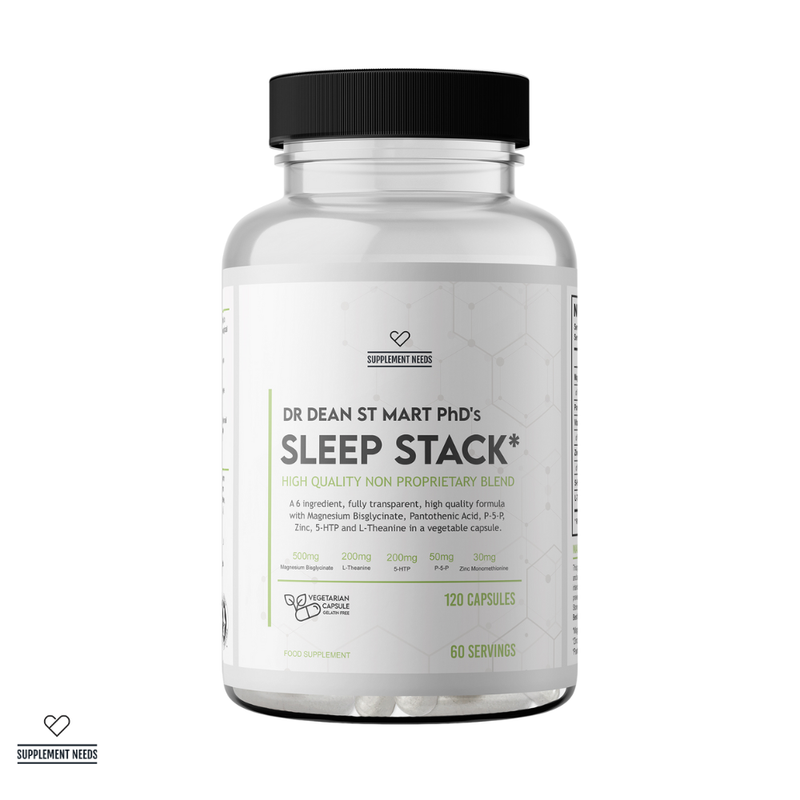
Sleep is the most commonly underestimated cause of low libido - but it’s also the easiest cause to remedy. Sleep Stack is a non-sedative formula combining magnesium bisglycinate, L-theanine, 5-HTP, zinc and B vitamins, designed to sit alongside consistent bedtimes and good sleep hygiene.
Supplement Needs Thyroid Stack

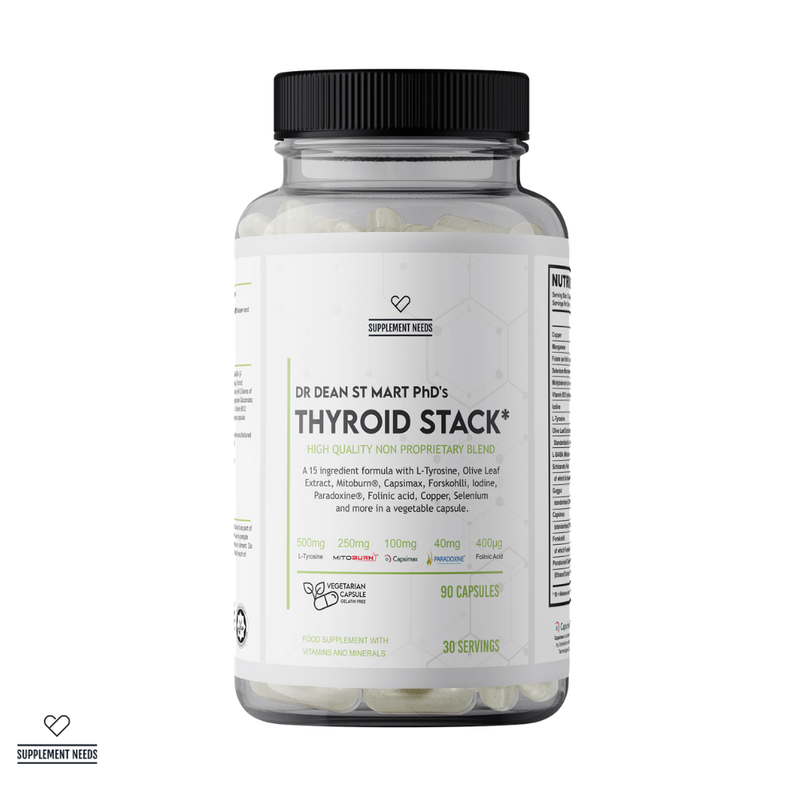
If low desire comes with fatigue, weight change or temperature sensitivity, get your thyroid tested first. Alongside this, a quality thyroid supplement - such as Supplement Needs Thyroid Stack - can help, providing L-tyrosine, iodine, and selenium.
Explore libido support supplements at Supplement Needs now
For more insights and information about supplements, read the Supplement Needs blog…
Magnesium: How Important Is It to Supplement? | Do Cortisol Supplements Actually Work? What You Need to Know | What Are the Best Supplements for Women Over 40?
Disclaimer:
The information on this website should not be used as a substitute for professional medical care or advice. If you have questions about your health, please contact your doctor.
References:
1. D Anderson, J Laforge, M Ross, et. al. Male Sexual Dysfunction [online]. Available at: https://pmc.ncbi.nlm.nih.gov/articles/PMC9392840/ (Accessed on 27th September 2026).
2. Cilio S, Boeri L, Pozzi E, et. al. Prevalence and predictors of unrecognised low sexual desire/interest in men with new onset erectile dysfunction: findings from a cross-sectional, real-life study [online]. Available at: https://www.nature.com/articles/s41443-022-00647-4 (Accessed on 27th September 2026).
3. O Adebisi, K Carlson. Female Sexual Interest and Arousal Disorder [online]. Available at: https://www.ncbi.nlm.nih.gov/books/NBK603746/ (Accessed on 27th September 2026).
4. Tripathi A, Agrawal A, Joshi M. Treatment-emergent sexual dysfunctions due to antidepressants: A primer on assessment and management strategies [online]. Available at: https://pmc.ncbi.nlm.nih.gov/articles/PMC11293283/ (Accessed on 4th October 2026).
5. Epidemiology and Psychiatric Sciences. Post-SSRI sexual dysfunction & other enduring sexual dysfunctions [online]. Available at: https://www.cambridge.org/core/journals/epidemiology-and-psychiatric-sciences/article/postssri-sexual-dysfunction-other-enduring-sexual-dysfunctions/8343798C6C29E850661020EF0CEA8968 (Accessed on 4th October 2026).
6. MHRA. Finasteride and Dutasteride - updated safety warnings for psychiatric side effects and sexual dysfunction [online]. Available at: https://www.gov.uk/drug-safety-update/finasteride-and-dutasteride-updated-safety-warnings-for-psychiatric-side-effects-and-sexual-dysfunction (Accessed on 4th October 2026).
7. Kafel H, Braga-Basaria M, Basaria S. Opioid-induced androgen deficiency in men: Prevalence, pathophysiology, and efficacy of testosterone therapy [online]. Available at: https://pubmed.ncbi.nlm.nih.gov/39982737/ (Accessed on 4th October 2026).
8. Soares F, Mesquita B, Fraga A, et. al. How sexuality is affected and managed in patients under antipsychotic drugs [online]. Available at: https://pmc.ncbi.nlm.nih.gov/articles/PMC10479492/ (Accessed on 4th October 2026).
9. Calabro R, Cerasa A. Drug-Induced Sexual Dysfunction in Individuals with Epilepsy: Beyond Antiepileptic Compounds [online]. Available at: https://pmc.ncbi.nlm.nih.gov/articles/PMC8948639/ (Accessed on 4th October 2026).
10. Zimmerman Y, Eijkemans M, Bennink H, et. al. The effect of combined oral contraception on testosterone levels in healthy women: a systematic review and meta-analysis [online]. Available at: https://academic.oup.com/humupd/article/20/1/76/887764 (Accessed on 4th October 2026).
11. Pastor Z, Holla K, Chmel R. The influence of combined oral contraceptives on female sexual desire: a systematic review [online]. Available at: https://pubmed.ncbi.nlm.nih.gov/23320933/ (Accessed on 4th October 2026).
12. Santi D, Cignarelli A, Baldi M, et. al. The chronic alcohol consumption influences the gonadal axis in men: Results from meta-analysis [online]. Available at: https://onlinelibrary.wiley.com/doi/10.1111/andr.13526 (Accessed on 4th October 2026).
13. Solanki P, Eu B, Smith J, Allan C, Lee K. Physical, psychological and biochemical recovery from anabolic steroid-induced hypogonadism: a scoping review [online]. Available at: https://journals.bioscientifica.com/ec/article/12/12/e230358/1611/Physical-psychological-and-biochemical-recovery (Accessed on 4th October 2026).
14. Leproult R, Cauter E. Effect of 1 week of sleep restriction on testosterone levels in young healthy men [online]. Available at: Effect of 1 week of sleep restriction on testosterone levels in young healthy men - PubMed (Accessed on 4th October 2026).
15. Su L, Meng Y, Zhang S, et. al. Association between obstructive sleep apnea and male serum testosterone: A systematic review and meta-analysis [online]. Available at: Association between obstructive sleep apnea and male serum testosterone: A systematic review and meta‐analysis - Su - 2022 - Andrology - Wiley Online Library (Accessed on 4th October 2026).
16. Kim S, Cho K. Obstructive Sleep Apnea and Testosterone Deficiency [online]. Available at: Obstructive Sleep Apnea and Testosterone Deficiency - :: WJMH :: World Journal of Men's Health (Accessed on 4th October 2026).
17. Genchi V, Rossi E, Lauriola C, et. al. Adipose Tissue Dysfunction and Obesity-Related Male Hypogonadism [online]. Available at: https://pmc.ncbi.nlm.nih.gov/articles/PMC9330735/ (Accessed on 4th October 2026).
18. Biernikiewicz M, Rusiecka A, Kalka D. Obesity and sexual desire: a systematic review and meta-analysis [online]. Available at: https://academic.oup.com/jsm/article-abstract/22/5/677/8101328 (Accessed on 4th October 2026).
19. Mountjoy M, Ackerman K, Bailey D, et. al. 2023 International Olympic Committee’s (IOC) consensus statement on Relative Energy Deficiency in Sport (REDs) [online]. Available at: https://stillmed.olympics.com/media/Documents/Athletes/Medical-Scientific/Consensus-Statements/REDs/BJSM-IOC-consensus-statement-on-Relative-Energy-Deficiency-in-Sport-REDs.pdf (Accessed on 4th October 2026).
20. Nikzad Z, Iravani M, Abedi P, et. al. The relationship between iron deficiency anaemia and sexual function and satisfaction among reproductive-aged Iranian women [online]. Available at: https://pmc.ncbi.nlm.nih.gov/articles/PMC6283628/ (Accessed on 4th October 2026).
21. Chang C, Choi J, Kim H, Park S. Correlation Between Serum Testosterone Level and Concentrations of Copper and Zinc in Hair Tissue [online]. Available at: https://link.springer.com/article/10.1007/s12011-011-9085-y (Accessed on 4th October 2026).
22. Mitchell K, Mercer C, Ploubidis G, et. al. Sexual function in Britain: findings from the third National Survey of Sexual Attitudes and Lifestyles (Natsal-3) [online]. Available at: https://pmc.ncbi.nlm.nih.gov/articles/PMC3898902/ (Accessed on 4th October 2026).
23. Pascoal P, Narciso I, Pereira N. Predictors of Body Appearance Cognitive Distraction during Sexual Activity in Men and Women [online]. Available at: https://www.sciencedirect.com/science/article/abs/pii/S1743609515337838 (Accessed on 4th October 2026).
24. McNulty J, Maxwell J, Meltzer A, Baumeister R. Sex-Differentiated Changes in Sexual Desire Predict Marital Dissatisfaction [online]. Available at: https://rd.springer.com/article/10.1007/s10508-019-01471-6 (Accessed on 4th October 2026).
25. ibid.
26. Mostafaei H, Mori K, Hajebrahimi S, et. al. Association of erectile dysfunction and cardiovascular disease: an umbrella review of systematic reviews and meta-analyses [online]. Available at: https://pmc.ncbi.nlm.nih.gov/articles/PMC8359379/ (Accessed on 4th October 2026).
27. Edeki I, Adejumo O, Oyedepo D, et. al. Sexual dysfunction and effect on quality of life in chronic kidney disease: a systematic review and meta-analysis [online]. Available at: https://pubmed.ncbi.nlm.nih.gov/42321701/ (Accessed on 4th October 2026).
28. Maxwell M, Alvarado M, Khungar V. Approach to sexual dysfunction in patients with chronic liver disease [online]. Available at: https://pmc.ncbi.nlm.nih.gov/articles/PMC11168852/ (Accessed on 4th October 2026).
29. Khan S, Ashkar R, Kumari S, et. al. Long COVID syndrome: psychological and sexual dysfunction among survivors of COVID-19 infection [online]. Available at: https://pmc.ncbi.nlm.nih.gov/articles/PMC10553038/ (Accessed on 4th October 2026).
30. Pluchino N, Wenger J, Petignat P, et. al. Sexual function in endometriosis patients and their partners: effect of the disease and consequences of treatment [online]. Available at: https://academic.oup.com/humupd/article/22/6/762/2420607 (Accessed on 4th October 2026).
31. Alshahrani S, Fathi B, Abouelgreed T, El-Metwally A. Prevalence of Sexual Dysfunction with Chronic Prostatitis/Chronic Pelvic Pain Syndrome (CP/CPPS): An Updated Systematic Review and Meta-Analysis [online]. Available at: https://pmc.ncbi.nlm.nih.gov/articles/PMC12195409/ (Accessed on 4th October 2026).
32. Yatavelli R, Kaur J, Bhusal K. Prolactinoma [online]. Available at: https://www.ncbi.nlm.nih.gov/sites/books/NBK459347/ (Accessed on 11th October 2026).
33. Biernikiewicz M, Rusiecka A, Kalka D. Obesity and sexual desire: a systematic review and meta-analysis [online]. Available at: https://academic.oup.com/jsm/article-abstract/22/5/677/8101328 (Accessed on 11th October 2026).
34. Davis S, Baber R, Panay N, et. al. Global Consensus Position Statement on the Use of Testosterone Therapy for Women [online]. Available at: https://academic.oup.com/jcem/article/104/10/4660/5556103 (Accessed on 11th October 2026).