
What is whey protein concentrate?
Whey protein is derived from milk and contains all nine essential amino acids.
Whey protein concentrate is produced by filtering whey to remove part of its water, carbohydrate and fat content while retaining a concentrated protein fraction.
The exact percentage of protein varies between raw materials and finished products. Whey concentrates used in sports-nutrition powders commonly provide less protein by weight than whey isolates, but can offer a more rounded milk-based flavour and texture.
A whey concentrate based protein powder may be suited to customers who:
- tolerate milk and lactose
- want a convenient daily protein powder
- prefer a creamier shake
- do not require the highest possible protein percentage
- want a typically more accessible alternative to isolate
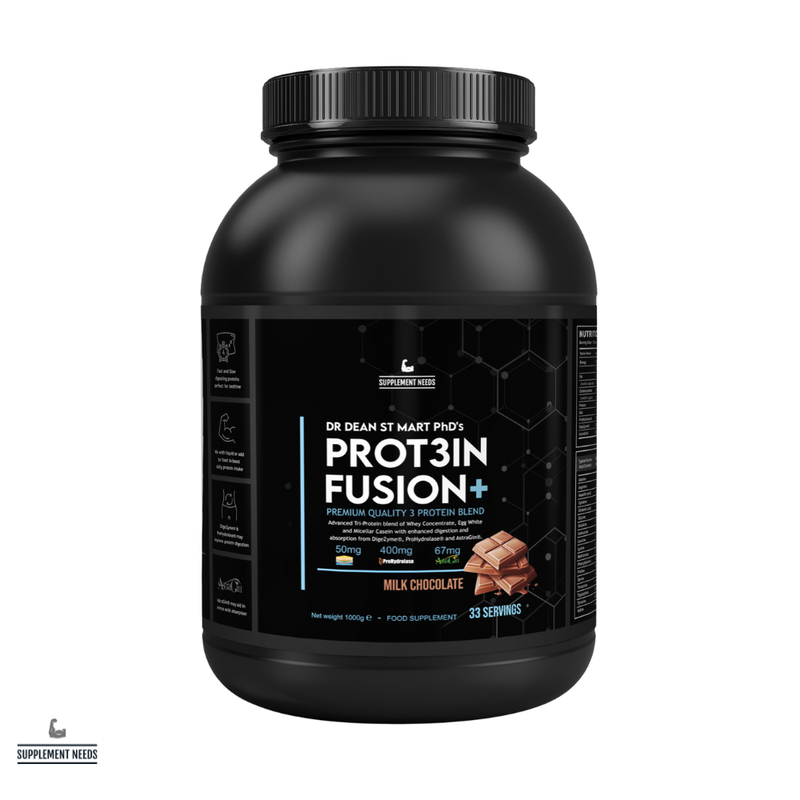
The current Supplement Needs product is not made solely from whey concentrate; Prot3in Fusion combines whey concentrate with egg white protein and micellar casein.
Whey concentrate vs whey isolate
Whey concentrate and whey isolate both come from whey, but isolate undergoes additional filtration.
Whey concentrate
- Milk derived whey
- Typical protein percentage often up to approximately 80%
- Lactose, fat and carbohydrate is usually higher than isolate
- Texture is often creamier
- Best suited to customers wanting general daily protein intake
Whey Isolate
- More extensively filtered milk derived whey
- Typical protein percentage can reach approximately 90%
- Lactose, fat and carbohydrate usually reduced through further filtration
- Texture is often lighter
- Best suited to customers prioritising higher protein concentration or lower lactose
Supplement Needs Whey ISO+ is a standalone whey protein isolate providing 27g protein in a 30g serving, whereas Prot3in Fusion provides 21.74g in 30g from a blend of whey concentrate, egg white and micellar casein.
Choose a whey concentrate containing formula if…
You want a more traditional milk-based protein experience and do not specifically require the highest possible protein percentage.
Choose Whey ISO+ if…
You want a standalone whey isolate with 90% protein content and 27g protein per 30g serving.
Whey concentrate vs a protein blend
A whey concentrate formula normally uses whey concentrate as its principal or only protein source.
A protein blend combines multiple protein ingredients. Prot3in Fusion combines:
- Whey protein concentrate
- Egg white protein
- Micellar casein
This allows customers to obtain three distinct protein sources within one shake rather than purchasing separate whey, egg white and casein products.
Whey concentrate vs casein
Both whey and casein are milk derived proteins, but they are used differently within protein products.
Whey is commonly selected for straightforward shakes around training or throughout the day.
Casein is often used in thicker formulas and evening protein routines.
Prot3in Fusion includes micellar casein alongside whey concentrate and egg white protein, giving it a thicker multi source format rather than the lighter consistency expected from a pure whey product. The product direction offers a 45g serving as the heavier shake option.
Why choose a multi source protein powder?
A multi source protein powder may appeal to customers who want:
- multiple protein ingredients in one serving
- a fuller or thicker shake consistency
- flexible serving sizes
- a formula suitable at different points in the day
- an alternative to a single source whey product
Prot3in Fusion provides 2.385g leucine per 30g serving and 3.5775g per 45g serving.
Protein contributes to the maintenance of muscle mass.
How much protein does Prot3in Fusion provide?
Prot3in Fusion offers two suggested serving sizes.
30g serving
A 30g serving provides:
- 21.74g protein
- 98.82 kcal
- 0.71g fat
- 1.05g carbohydrate
- 1.04g sugar
45g serving
A 45g serving provides:
- 32.6g protein
- 148.23 kcal
- 1.07g fat
- .57g carbohydrate
- 1.56g sugar
The larger serving is not automatically necessary.
ustomers should select a serving according to their total daily dietary protein intake, meal structure and individual requirements.
When can I use a protein powder?
A protein powder can be used whenever it provides a convenient way to complement dietary protein intake.
Common options include:
- after training
- between meals
- as part of breakfast
- blended into oats or yoghurt
- during busy periods when preparing a full meal is difficult
- in an evening shake
Protein powder should complement, not replace, a varied and balanced diet.
The current Prot3in Fusion directions recommend mixing either 30g with approximately 300ml liquid or 45g with approximately 250ml liquid for a thicker shake.
How should I choose a protein powder?
Consider the following before choosing:
Protein source
Check whether the product contains:
- whey concentrate
- whey isolate
- casein
- egg white
- plant proteins
- or a blend
Protein per serving
Look at the actual grams of protein, not just the scoop size.
Dietary requirements
Whey concentrate, whey isolate and casein are milk derived. Prot3in Fusion also contains egg.
Lactose tolerance
Customers who are sensitive to lactose may prefer to compare whey isolate or vegan protein alternatives such as Vegan ISO+.
A milk allergy is different from lactose intolerance and requires avoidance of milk containing products.
Texture and flavour
Concentrate and casein containing blends are often selected by customers who prefer a fuller texture.
Serving flexibility
Prot3in Fusion allows either a 30g or 45g serving, while Whey ISO+ is positioned around a 30g serving.
FAQs
What is whey protein concentrate?
Whey protein concentrate is a milk derived protein ingredient created by filtering whey to concentrate its protein content.
It normally contains more naturally occurring lactose, carbohydrate and fat than a more extensively filtered whey isolate.
Is Prot3in Fusion a pure whey concentrate?
No.
Prot3in Fusion is a multi-source protein blend containing 30% whey protein concentrate, 30% egg white protein and 30% micellar casein.
What is the difference between whey concentrate and whey isolate?
Whey isolate undergoes more extensive filtration and generally provides a higher percentage of protein with less lactose and fat.
Supplement Needs Whey ISO+ provides 27g protein per 30g serving, while Prot3in Fusion provides 21.74g protein per 30g serving from three different protein sources.
What is the difference between Prot3in Fusion and Whey ISO+?
Prot3in Fusion combines whey concentrate, egg white protein and micellar casein.
Whey ISO+ uses whey protein isolate as its protein source and provides 90% protein content.
Choose according to whether you prefer a multi source blend or a higher protein content whey isolate.
How much protein is in Prot3in Fusion?
A 30g serving provides 21.74g protein.
A larger 45g serving provides 32.6g protein.
How many servings are in a tub?
The 1kg tub provides approximately:
- 33 servings at 30g
- 20 servings at 45g
The number of servings depends on the serving size selected.
How do I mix Prot3in Fusion?
Mix 30g with approximately 300ml water, milk or a dairy free alternative.
For a thicker, higher protein shake, mix 45g with approximately 250ml liquid. Adjust the amount of liquid according to your preferred consistency.
Can I use Prot3in Fusion after training?
Prot3in Fusion can be used after training as one way of complementing daily dietary protein intake.
The most important consideration is your overall diet and total daily protein intake rather than relying on one particular timing window.
Can I use Prot3in Fusion in the evening?
Yes.
The product can be used within an evening nutrition routine.
Because it contains micellar casein alongside whey and egg white protein, it offers a thicker multi source format.
What flavours are available?
Prot3in Fusion is currently available in:
- Milk Chocolate
- Salted Caramel
- Strawberry Cheesecake
Is Prot3in Fusion suitable for vegetarians?
Yes. The current product page lists Prot3in Fusion as suitable for vegetarians.
It is not suitable for vegan customers because it contains milk and egg ingredients.
Is Prot3in Fusion Halal certified?
Yes. Prot3in Fusion is Halal certified.
Does Prot3in Fusion contain allergens?
Yes.
Prot3in Fusion contains milk and egg and is manufactured in a facility that also processes other common allergens.
Is whey concentrate suitable for people with lactose intolerance?
Whey concentrate generally retains more lactose than whey isolate, so individual suitability can differ.
People with lactose intolerance should review the individual nutritional and allergen information.
Anyone with a milk allergy should not use a milk derived whey product.
Is protein powder a substitute for food?
Protein powder can complement a varied and balanced diet but should not automatically replace whole food meals.
Use it as a convenient protein source within an appropriately structured diet.